Loading the page
Explore the body in 3D, then learn why it works.
Peel back the layers from skin to bone, tap any muscle, bone, vessel or organ in the model, and read the article that explains it. It is free, it runs in your browser, and there is nothing to sign up for.
- 2,336 modeled structures
- 15 body systems
- 188 articles
Start here.
Not sure where to begin? Pick a region and follow a path: read, explore in 3D, take the quiz, review the cards. You can also look up a term or ask the tutor.
Abdomen and Pelvis
The abdominal wall, the digestive organs and their blood supply, the kidneys, and the pelvic organs, floor and perineum.
Head and Neck
The skull, face, mouth, nose, eye and ear, and the neck with its fascia, thyroid, airway and vessels.
Lower Limb
The hip, thigh, knee, leg, ankle and foot: how the limb bears weight and moves, and how its nerves and vessels run.
Neuroanatomy
Neurons and the autonomic system, the brain from cortex to cerebellum, the ventricles and their coverings, the spinal cord and the cranial nerves.
Thorax
The chest wall, breathing, the lungs and the mediastinum, with a close look at the heart and the great vessels.
Upper Limb Mastery
From the shoulder girdle to the fingertips: bones, joints, muscles, nerves and vessels of the arm, forearm and hand.
Take the body apart, layer by layer.
The atlas is built on BodyParts3D, an open anatomy model. Every structure is its own piece, so you can pick it up, hide it or look behind it.
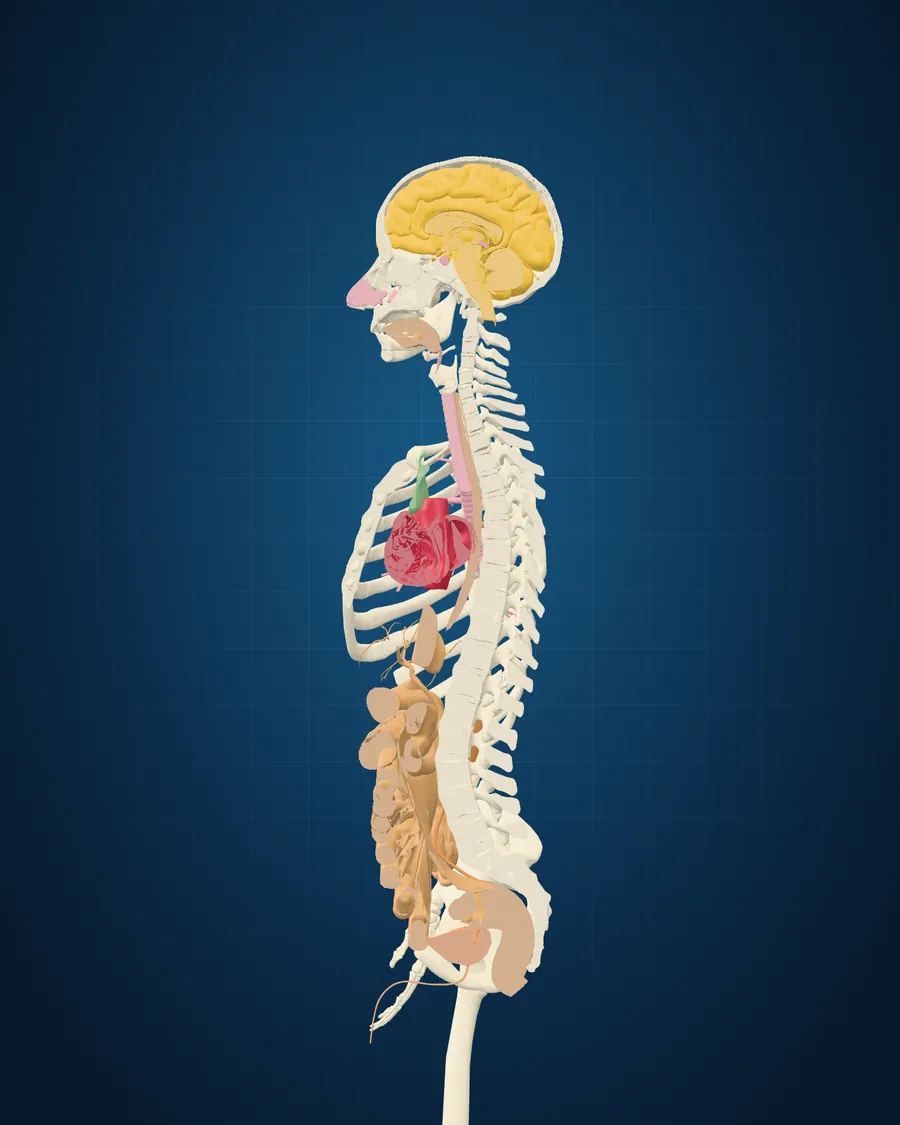
- LayersSwitch each body system on or off, or peel from skin to bone with one slider.
- SearchFind any of 2,336 structures by name, including common alternative names.
- Cross-sectionsSlice along any axis and see the cut surface, as in a dissection or a scan.
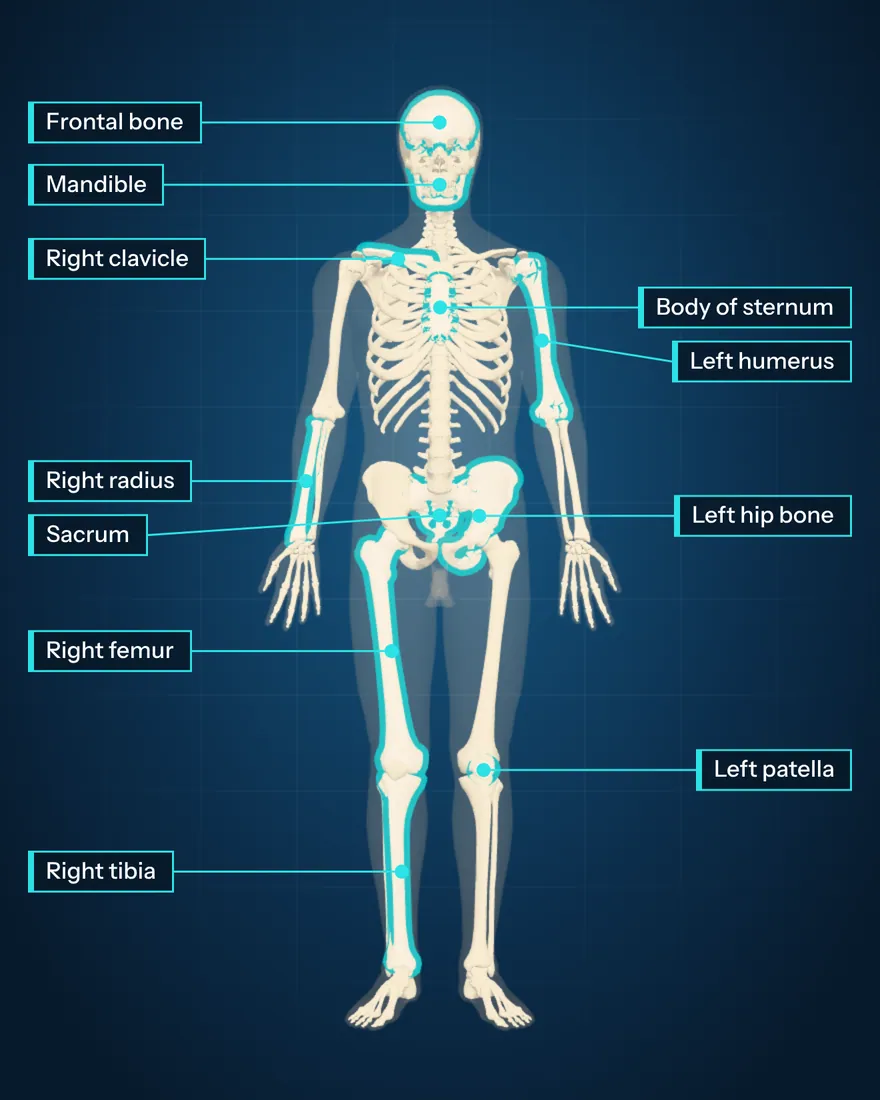
- TagsTap a structure to outline it and pin a labelled tag to it. Isolate it, dim the rest, or hide it.
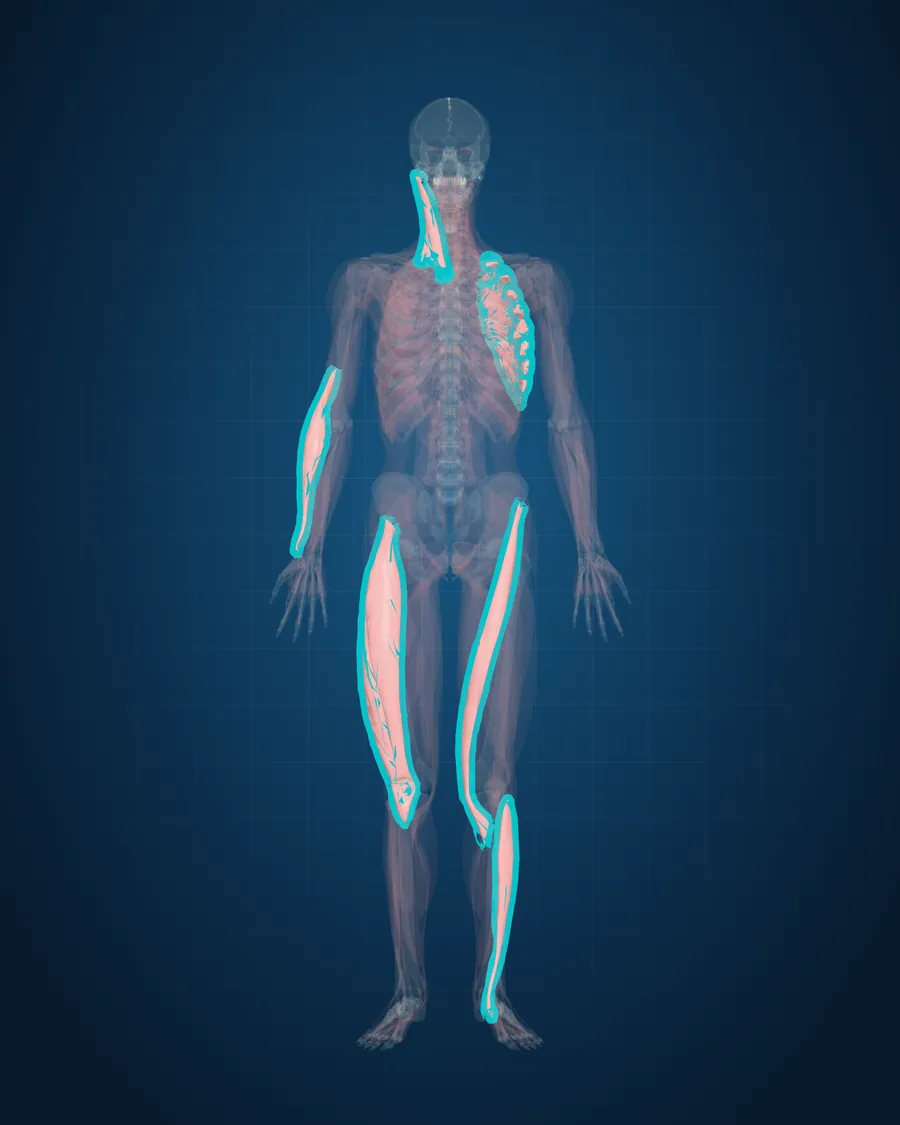
- AttachmentsMuscle articles open the atlas with the origin in blue and the insertion in green.
- ExplodePull the layers apart to see how they stack.
Read it in plain words.
Articles are organized by body region. Each one explains why the structure sits where it does and what happens when it fails.
- FoundationsThe language of anatomy, tissues, and how the body systems fit together.23 articles
- HeadThe skull, face, brain, eye and ear.38 articles
- NeckThe airway, thyroid, great vessels and the muscles that hold the head.10 articles
- BackThe vertebral column, spinal cord and the muscles of the back.12 articles
- ThoraxThe chest wall, lungs, heart and the structures between them.21 articles
- AbdomenThe abdominal wall, gut, liver, kidneys and their blood supply.21 articles
- Pelvis and perineumThe pelvic girdle, pelvic floor and the organs they hold.11 articles
- Upper limbThe shoulder, arm, forearm and hand.27 articles
- Lower limbThe hip, thigh, leg and foot.25 articles
Then test yourself.
Short quizzes check what you read. Flashcards bring back what you are about to forget.
Quizzes
Multiple choice with a short explanation after every answer, and a link back to the article.
77 decks, 1724 questionsFlashcards
Spaced repetition: cards you know come back later, cards you miss come back soon.
61 decks, 1893 cardsFind it in 3D
You get a name. You tap the structure on the 3D body. It tells you if you were right.
Uses the atlasMade by Excel (Xcelsama)Your progress, notes and bookmarks are saved in this browser only. There are no accounts and nothing is sent to a server.